
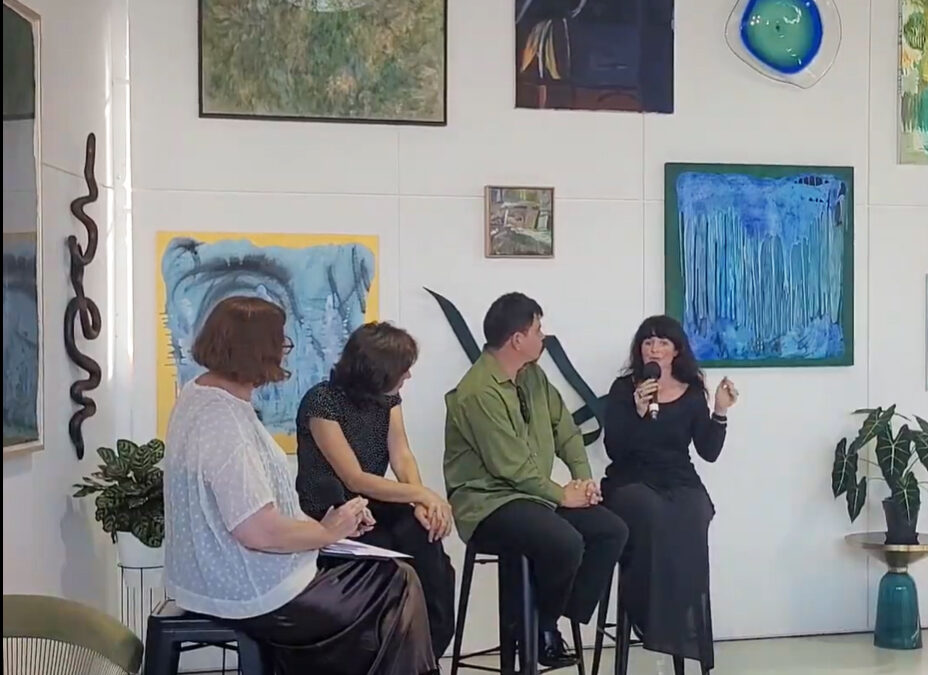
Blank Canvas: what happens before the first mark is made
A reflection on our NZ Design Week session – the artists who joined us and the question that started it all.
There’s a question we find ourselves returning to, again and again, in the work of curating art for living spaces: how do you bridge the gap between a client’s architectural vision and a home that truly feels complete?
It’s a question with no single answer – and that’s precisely what makes it so rich. During NZ Design Week, we invited a room full of interior designers, architects, and design-curious minds to explore it with us. We opened with a provocation: do designers start a project the same way an artist approaches a blank canvas? It sounds deceptively simple. But in a room full of creatives – some who work with clients’ visions, others who work entirely from within – the answers were anything but. For the artists in the room, the blank canvas is not a neutral starting point. It’s charged. It’s a relationship. And how each artist manages that charge turned out to be a window into something much deeper about the creative process.
“The Blank Canvas isn’t empty, it’s full of possibility and pressure in equal measures.”
Three artists, three approaches…
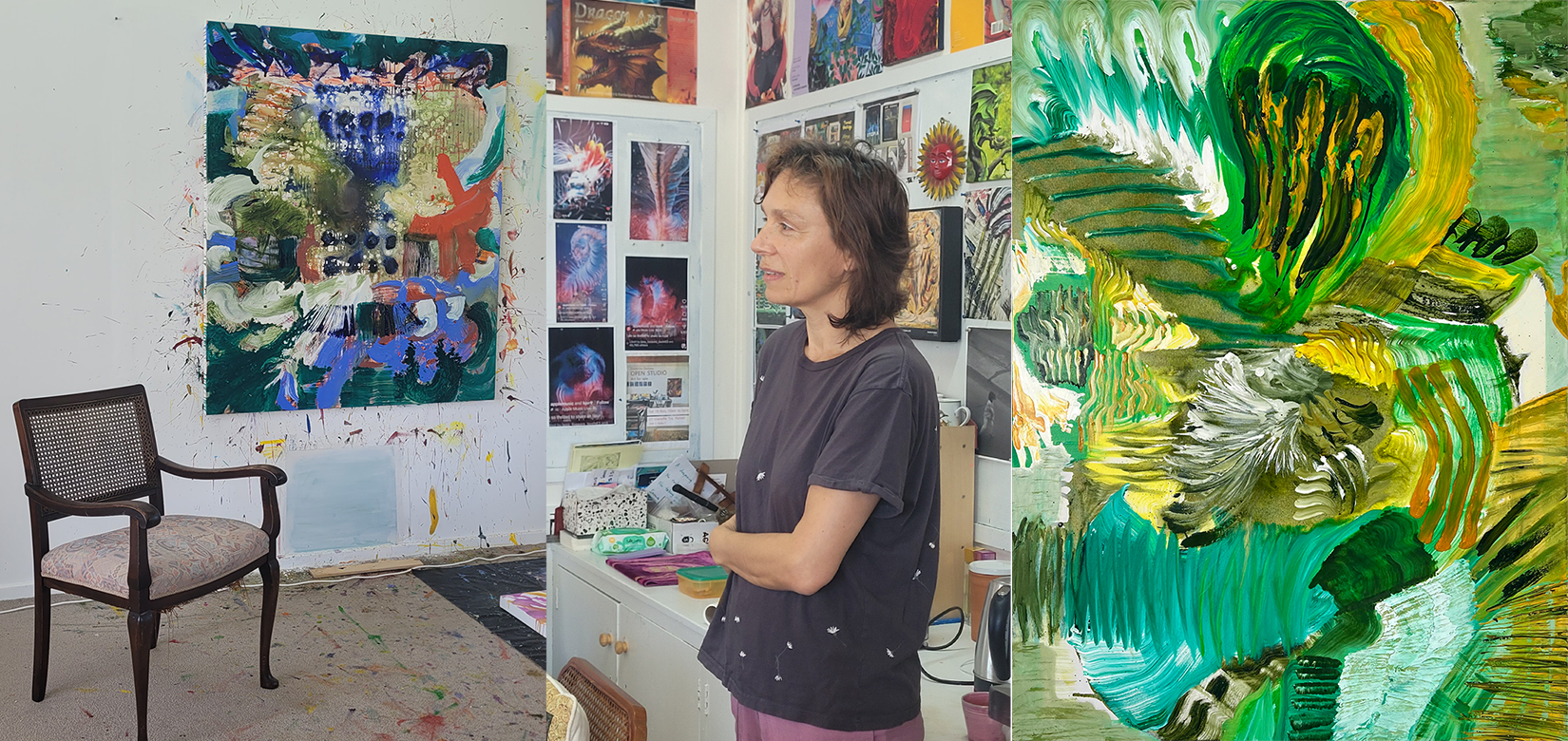
Ekaterina Dimieva: Abstraction · Sensation · Transformation
For Ekaterina, or EK, the blank canvas is something to be covered immediately – almost urgently. She doesn’t wait. She removes the white with colour and energy before the hesitation can set in. But it’s not recklessness. It’s a kind of listening. She’s not searching for something to put onto the canvas – she’s searching within herself for what she needs to make.
When the feeling is there, it goes on like a force. When it isn’t, she knows better than to push. The charge has to be real, or nothing sticks.
Read more about EK here.
__________________________________________________
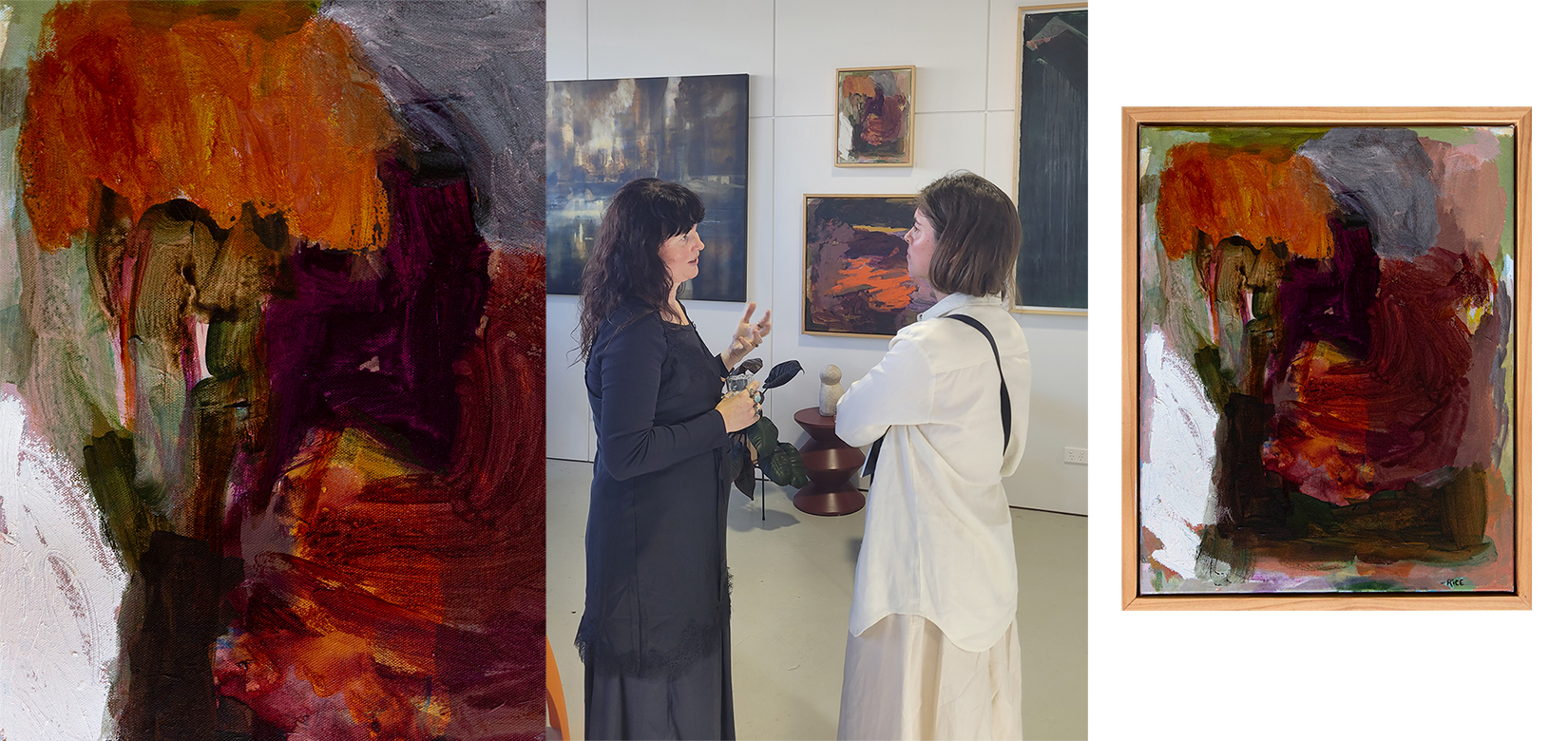
Lucy Rice: Memory · Emotion · Luminous Expression
Lucy’s approach is shaped by life as much as by art. Time-poor with a full household, she doesn’t have the luxury of waiting for inspiration to arrive. So she creates the conditions for it: music on, a dance to shift the energy, and then – multiple canvases on the go at once, each one corresponding to a different feeling or mood.
She’s drawn to colour above almost anything else, spending real time thinking about how to produce a specific hue, a specific glow. Her mind is always running ahead – full of ideas waiting for the moment she can give them form.
Read more about Lucy here.
__________________________________________________
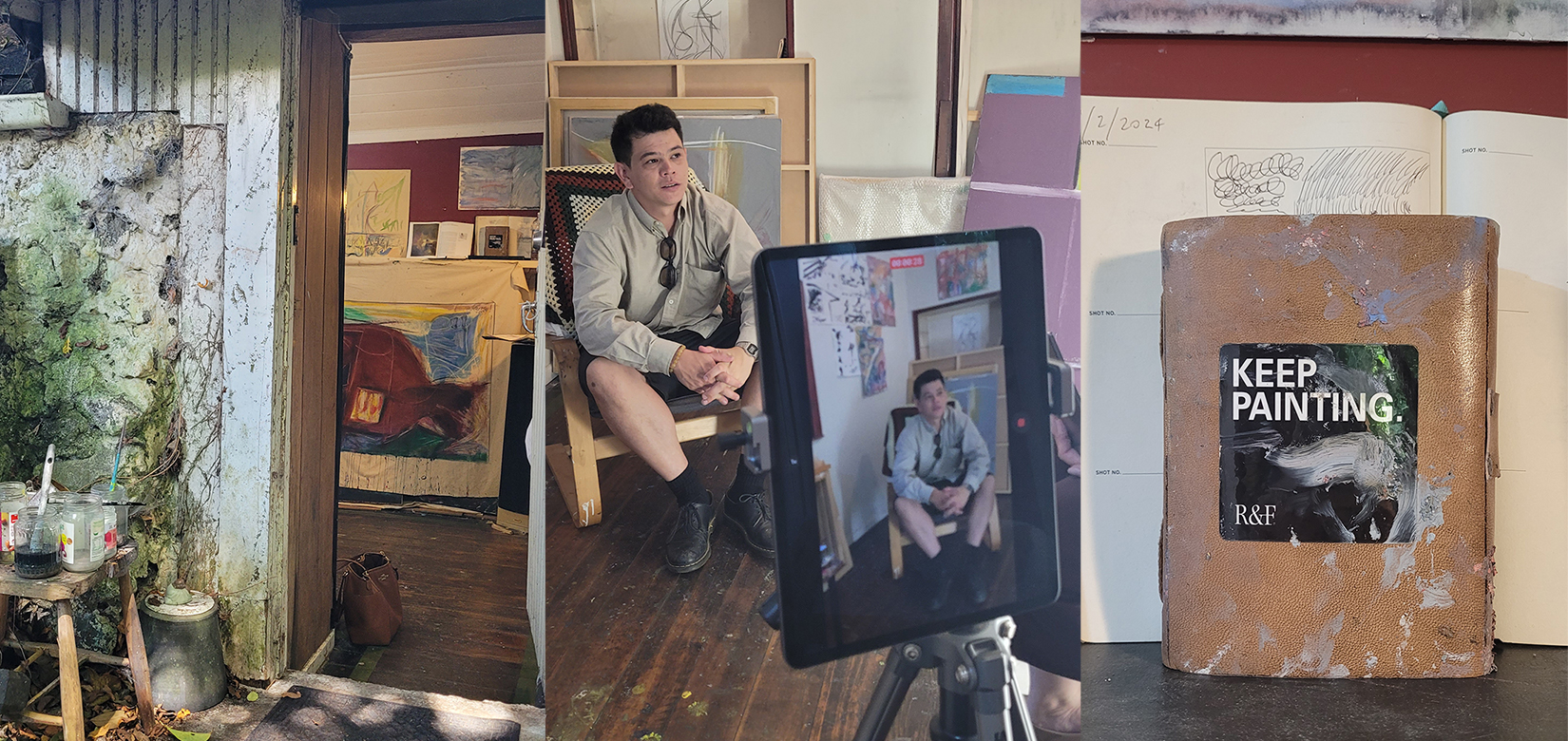
Daniel Kerr: Music · Memory · Spirituality
Daniel builds toward the canvas slowly, deliberately. He thinks about the work long before he makes it – sketching in notebooks, sitting in his studio, letting the feelings accumulate rather than forcing them. There’s a discipline to it: he won’t commit to the canvas until the energy is ready. But he also doesn’t wait passively. He stays active – drawing, observing, living – so that when the right moment arrives, he’s already there to meet it.
Read more about Daniel here.
__________________________________________________
What struck us, listening to all three, was how different the rituals were – and how similar the underlying truth. Whether it’s covering the canvas immediately or waiting to feel the charge, every artist is navigating the same fundamental question: when is the work ready to begin, and when is the right time to walk away?
Stay tuned as we launch our Artist Studio Series, visiting and interviewing artists to gain further insight into what makes them tick, and how they are able to influence how we feel about our lives and ourselves by living with their pieces in our homes.
To be kept up to date with projects and early collection releases, sign up via Contact. We only send arty divine-ness.