


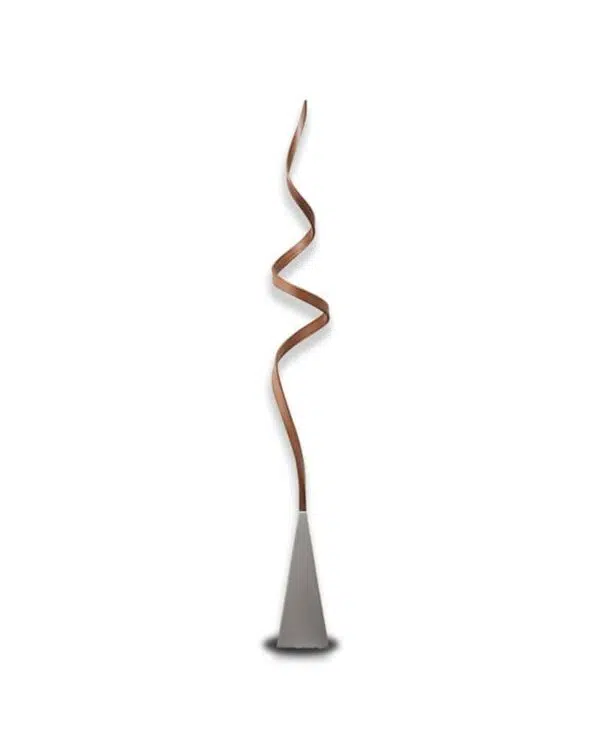


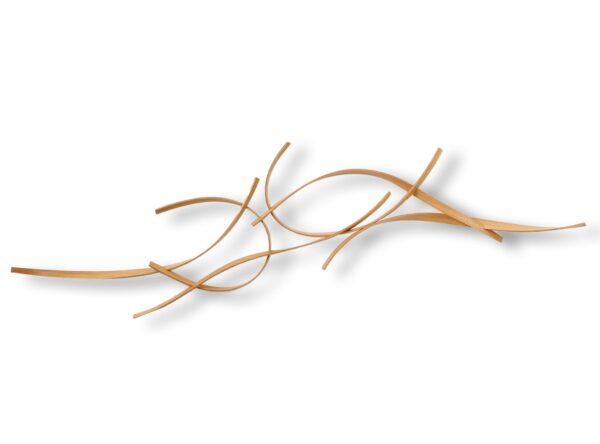
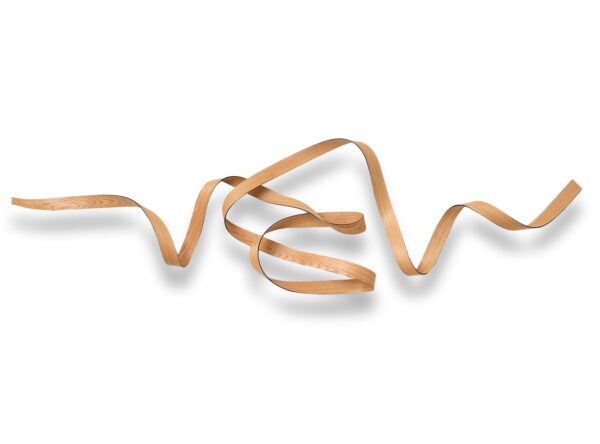
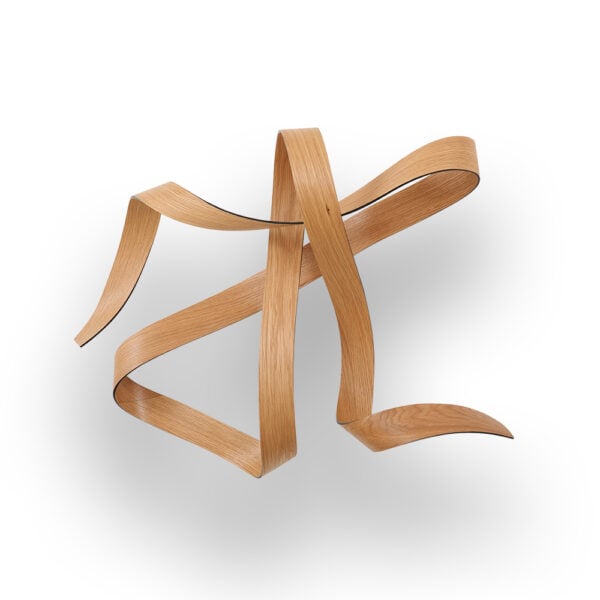
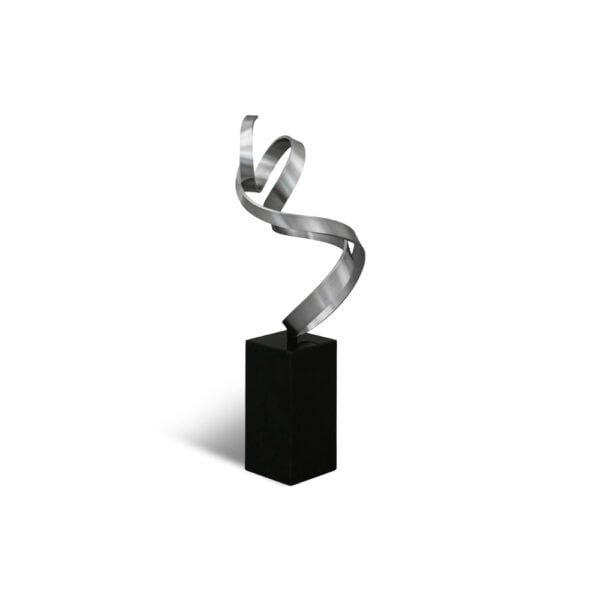

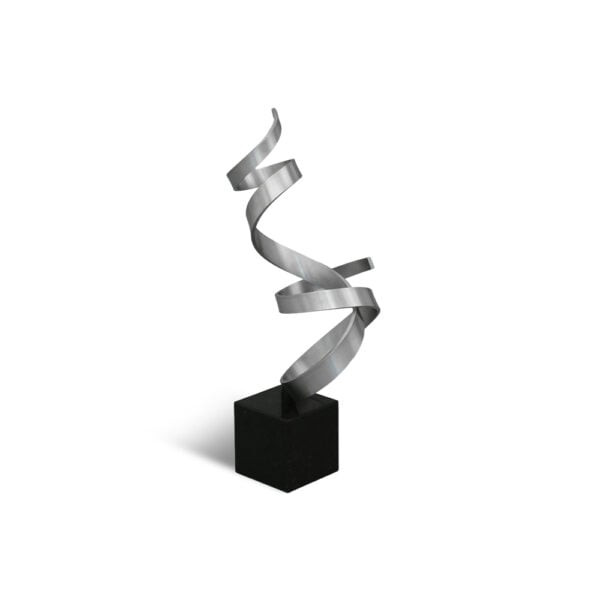
Negative space is defined by the solid objects it surrounds. This is one of the physical aspects of Ray Haydon’s sculptural practice that really matters; he is actively “painting” the air with materials to fabricate constructions in space.
In the same spirit of the Russian Constructivists like Naum Gabo, Ray understands and is constantly testing the variable ways that materials such as steel, wood and carbon fibre can take on extraordinary new forms – pure materiality, monochromatic economy and complicated structures made to maximise spatial dynamics.
His recent works from the Manoeuvre and Knot series are crafted from carbon fibre and timber veneer and give form to graceful movement such as one might expect to see in the ribbon event from an Olympic rhythmic gymnast. The works’ open-ended and interweaving lengths vary in “knottedness” underscoring the expert understanding of materiality that Ray exploits.
Each work is a suspension of the materials in time and space and we are privy to viewing the kinetic rhythms of the basic perceptions of real time. This is no mean feat: because, for solid materials to appear this way, there must be an intimate knowledge of the peculiarity of the materials for each work.
Ray has an in-depth knowledge of the materials he employs. Before embarking on his artistic career, he worked as a jeweller for many years, and then later constructing and designing fittings for super yachts. These experiences all lead to the symbiotic relationship he has with all of the different materials he uses.
The respect for each of the selected materials is evident in Ray’s practice. Whether Corten steel, stainless steel, bronze, wood, carbon fibre or veneer, his media defy their original material purposes to become constructions. His Reflector series (2017) uses much chunkier tubular stainless steel which possesses a new voluptuous sensuality. This is heightened by the smooth super glossy steel that has been burnished to achieve a mirror finish; a new direction that adds the element of solidity whilst still maintaining the permeability of the object.
Outdoor works differ greatly from works exhibited in a gallery context because they are required to propose and suggest a new and foreign object to a site that could be populated by trees, buildings, people and colour, while also being dictated to by the elements. These variables require the artist to be attuned to the environment. Scale, shape, suitable materials are the considerations that Ray successfully negotiates. Works that require wind to activate movement mean that the works need to be fit for purpose: to that end, Ray employs crafting methodologies used in boat building, furniture construction and jewellery making techniques to ensure the longevity of the works.
Travel I & II (2015), constructed from Corten steel, are examples of large-scale outdoor works that are Moebius strips (a one-sided flat strip that twists and joins in an eternal continuity), incredible feats of curvilinear beauty. Other outdoor works such as Oscillate (2019), Vela (2014) and Velorum (2013), both moulded and formed from carbon fibre, are site-responsive among trees, alluding to and reaching up to the surrounding vegetation. Named for constellations, these works sit majestic, pointing up to the stars that were said to have been used as navigation by Jason and the Argonauts.
Ray is constantly considering the unending physical propositions that lay in wait within the materials. With the most unforgiving and difficult media to work with, Ray bends, twists and forms works that show a fluidity of movement from the most rigid beginnings.
Essay by Leafa Wilson
Courtesy of Sanderson Contemporary